For most food manufacturers, perfumers, and specialty retailers, the question of whether to source vanilla from Indonesia or Madagascar is the single most important procurement decision in their vanilla supply chain. Both origins produce Vanilla planifolia of exceptional quality — but they are not interchangeable. Understanding the differences is critical to finding the right match for your product and your supply chain.
Key Takeaways for Buyers
- Indonesian vanilla offers higher vanillin content (up to 2.5% for Papua beans) vs Madagascar's typical 1.5–2.0%
- Madagascar vanilla has a sweeter, creamier, more universally familiar flavour; Indonesian vanilla is bolder, more complex, with woody and rum notes
- Indonesia offers more supply stability across three distinct growing regions vs Madagascar's single-island concentration
- Certification access is comparable — both origins can provide USDA Organic, EU Organic, and Fair Trade
- Price: Indonesian Grade A is typically 10–20% less expensive than equivalent Madagascan Grade A, with significantly larger bulk quantities available
1. Flavour Profile: The Fundamental Difference
This is where the two origins diverge most meaningfully. Both are Vanilla planifolia, but soil composition, rainfall patterns, curing traditions, and post-harvest handling produce distinctly different sensory outcomes.
Madagascar Vanilla
Madagascar vanilla — commonly called Bourbon vanilla after the old colonial name for Réunion Island — has become the global benchmark. Its flavour is characterised by a smooth, creamy sweetness with strong notes of caramel and a slightly floral finish. It is the vanilla that most consumers in western markets grew up with, embedded in ice cream, cookies, and custard formulations worldwide.
This familiarity is simultaneously its greatest strength and a limitation. For formulations where vanilla must integrate seamlessly with other flavours without introducing unexpected complexity, Madagascar is the safe, reliable choice.
Indonesian Vanilla
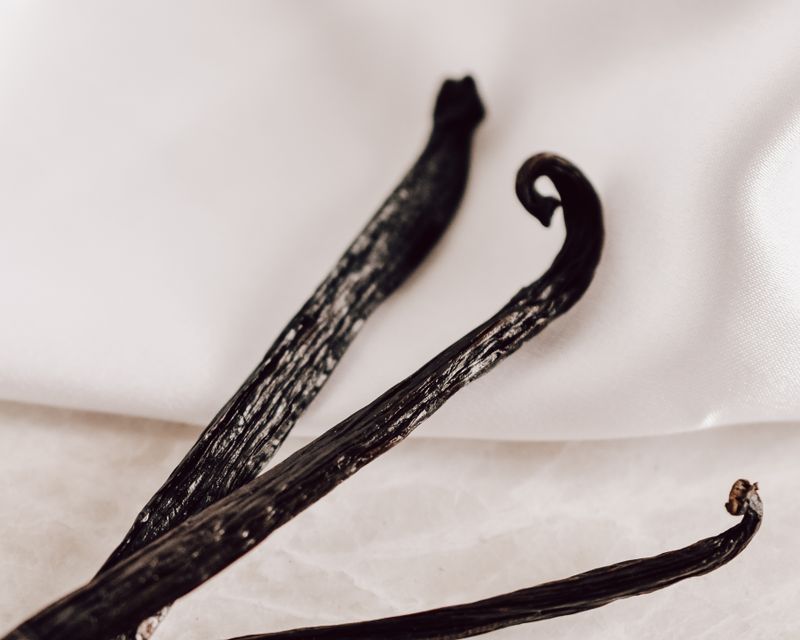
Indonesian vanilla — particularly from North Maluku and Papua — has a more complex, multi-layered character. The primary vanilla note is there, but it is accompanied by bold undertones of rum, dark chocolate, wood, and warm spice. This complexity is increasingly prized by craft chocolate makers, specialty bakers, high-end perfumers, and artisan spirits producers who want their vanilla to add depth, not just sweetness.
2. Vanillin Content: The Chemistry That Matters
Vanillin (4-hydroxy-3-methoxybenzaldehyde) is the primary flavour compound in vanilla. While hundreds of secondary compounds contribute to vanilla's complexity, vanillin is the measurable indicator of potency and the parameter most buyers track in their CoA.
| Origin | Typical Vanillin % | Peak Vanillin % | Grade |
|---|---|---|---|
| North Maluku, Indonesia | 2.0–2.2% | 2.3% | Grade A |
| Papua, Indonesia | 2.2–2.5% | 2.6% | Grade A (Ultra) |
| Central Sulawesi, Indonesia | 1.6–1.9% | 2.0% | Grade A & B |
| Madagascar (Bourbon) | 1.5–2.0% | 2.1% | Grade A |
The practical implication: higher vanillin content means you can achieve the same flavour impact with a lower inclusion rate — or achieve significantly stronger vanilla character at the same inclusion rate. For extract and oleoresin production, higher starting vanillin in the raw bean directly translates to higher-potency finished product with less raw material.
3. Supply Stability: Risk Management for Buyers
Madagascar's vanilla supply is famously volatile. The island nation accounts for approximately 75–80% of global vanilla bean supply, meaning any disruption — cyclones, political instability, crop disease — sends global prices spiralling. Buyers still remember the 2017 cyclone Enawo which caused vanilla prices to spike to over USD 600/kg.
Indonesia offers a structurally more stable supply for several reasons:
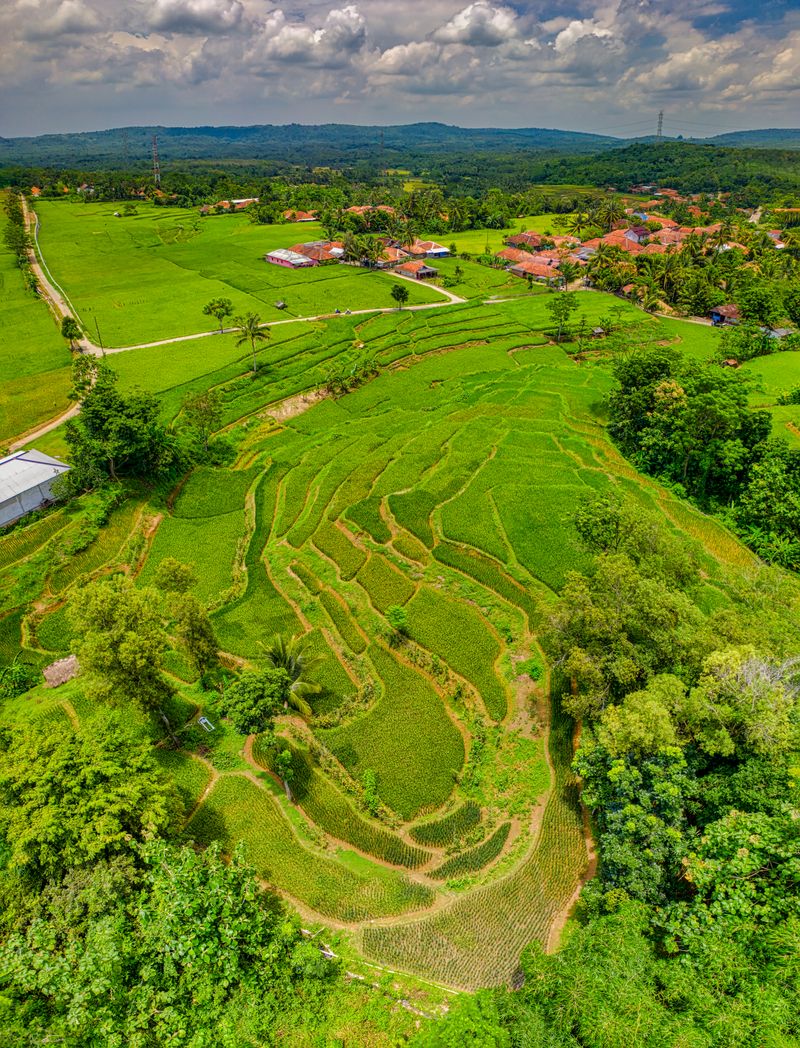
- Three distinct growing regions (North Maluku, Central Sulawesi, Papua) act as natural hedges — a poor season in one region rarely affects all three simultaneously
- Larger smallholder network — Indonesia's 500,000+ vanilla farming families across multiple islands provide significant supply redundancy
- Political stability — Indonesia's democratic system and economic growth trajectory provide a more predictable operating environment
- Growing export infrastructure — Indonesia's investment in logistics, processing facilities, and export documentation has significantly reduced lead times
4. Pricing: What to Expect in 2025
Vanilla pricing is complex and fluctuates based on harvest quality, global demand, and macro factors. That said, Indonesian vanilla has consistently offered a price advantage over equivalent Madagascan vanilla — typically in the range of 10–20% less expensive for comparable Grade A beans.
Pure Vanilla Indonesia provides exact pricing on request — we don't publish fixed prices as vanilla is a commodity with market-linked pricing. Contact our export team for a current quotation with FOB, CIF, and EXW breakdowns.
Request Current Pricing →For the 2025 season, our key observations are:
- The 2025 North Maluku harvest is above-average in quantity and exceptional in quality — buyer's market conditions for this origin
- Papua beans remain limited in supply and command a significant premium; pre-order recommended
- Indonesian extract and powder pricing is highly competitive vs European-processed Madagascan equivalents
5. Certifications: Equivalent Access
Both origins can provide equivalent certification access for the most important buyer requirements:
| Certification | Indonesia (PVI) | Madagascar (typical) |
|---|---|---|
| USDA Organic | Available | Available |
| EU Organic | Available | Available |
| Fair Trade (FLOCERT) | Available | Available (some) |
| ISO 22000 | Processing facility | Less common |
| Halal MUI / equivalent | MUI certified | Limited |
| Blockchain traceability | Since 2021 | Emerging |
| In-country ISO lab testing | In-house + SGS/Intertek | Primarily export country |
6. Which Origin Is Right for Your Product?
There is no universally "better" origin — there is only the origin that best suits your specific application, supply chain, and market. Here is our framework:
Choose Indonesian Vanilla if…
- Your product benefits from vanilla complexity — bold, rum, chocolate, woody notes
- You're formulating for craft chocolate, artisan spirits, specialty baking, or premium patisserie
- You require Halal certification with no alcohol components
- Supply reliability and multi-origin redundancy is a priority
- You want the highest vanillin content per kg of raw material
- Your procurement requires full blockchain-verified traceability
- Cost competitiveness at scale matters
Consider Madagascan Vanilla if…
- Your product targets mass-market consumers who expect a familiar "classic vanilla" flavour
- You're formulating standard ice cream, cookies, yogurt, or confectionery for traditional markets
- "Madagascar Origin" is a marketing claim valued by your customers
- You have existing supply agreements and compliance frameworks in place
- Your formulation was developed and consumer-tested specifically with Madagascar vanilla
Note: We at Pure Vanilla Indonesia focus exclusively on Indonesian origins. We can, however, recommend reputable Madagascan suppliers for buyers who determine Madagascar is the right fit.
7. The Bottom Line
Indonesian vanilla is no longer the "alternative" — it is increasingly the first choice for sophisticated buyers who want complexity, supply reliability, superior vanillin content, and competitive pricing. The 2025 harvest from North Maluku is among the finest we have produced in 15 years of sourcing.
"The question is not whether Indonesian vanilla is as good as Madagascan. The question is whether your product needs Madagascar's familiar sweetness, or Indonesian vanilla's bold complexity. Both are exceptional. They're just different."
If you're evaluating Indonesian vanilla for the first time, the most effective approach is simple: request comparative samples from both origins, run them through your formulation, and let the sensory results guide your decision. We offer free samples (5–100g) to qualified buyers — no commitment required.